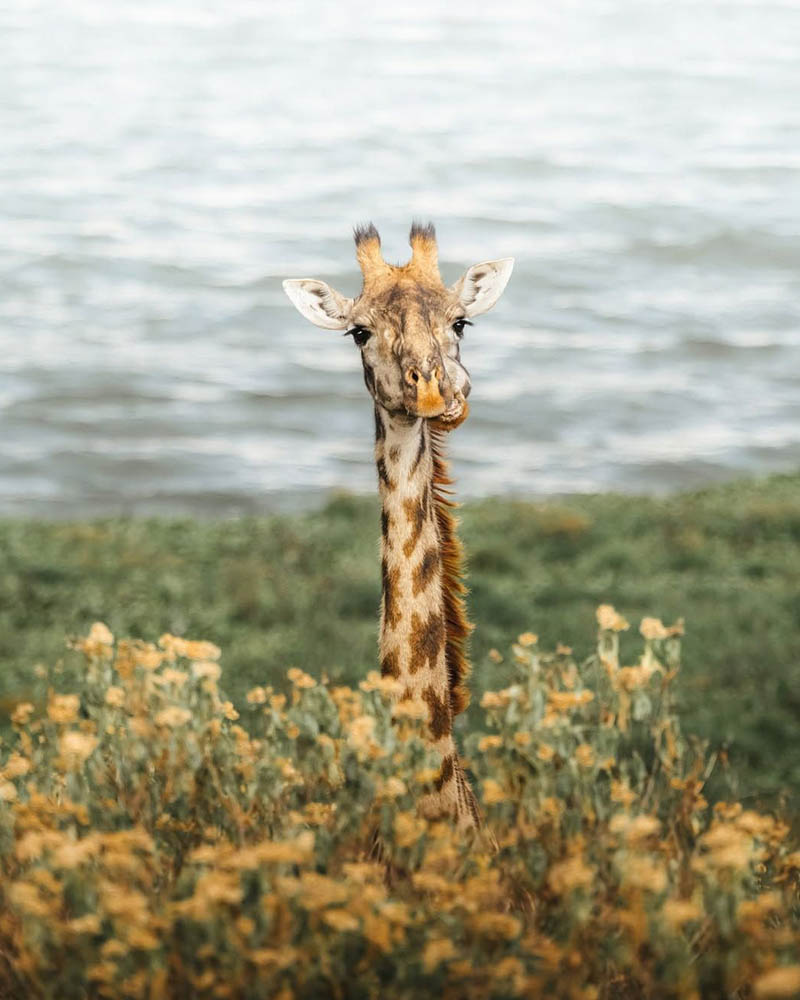
So little time, so many things to do in Naivasha? Then a walking safari at crescent Island is what you need. But picture this….Imagine standing on an open plain, the breeze off the lake cool against your skin, as a towering Maasai Giraffe browses acacia leaves just three metres away from you, no vehicle window, no barrier, no zoom lens required. That is a Tuesday morning at Crescent Island Game Sanctuary.
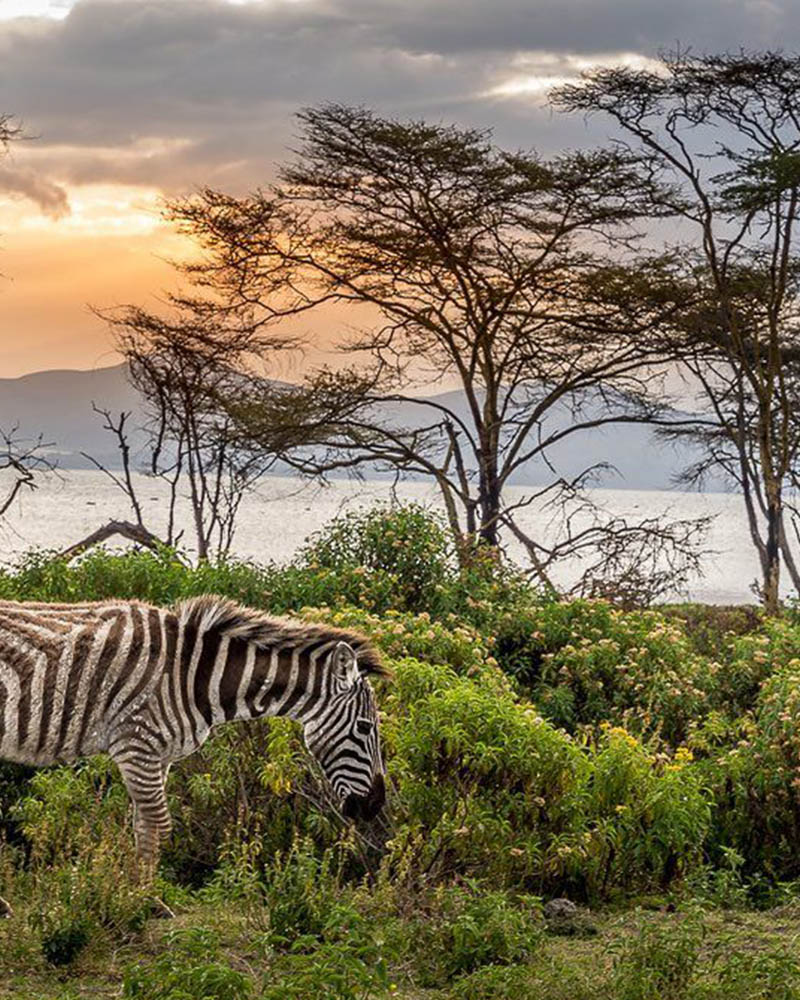
Located on Lake Naivasha in Kenya’s Great Rift Valley, Crescent Island is the rare kind of place that locals have been quietly visiting for years while the rest of the world slowly catches on. If you are planning a weekend getaway from Nairobi, a day trip from Naivasha, or you simply want a wildlife experience that feels genuinely personal, this is your guide.
What Makes Crescent Island Game Sanctuary So Special?
A Predator – Free Walking Safari – Yes, You Actually Walk
Most Kenyan wildlife reserves require you to stay inside a vehicle. Crescent Island flips that rule entirely. Because the sanctuary has no large predators, no lions, no leopards, no cheetahs ( cheaters lol); visitors are free to walk the open grasslands on foot, right alongside the resident wildlife.
The island sits on the exposed rim of a submerged volcanic crater, giving it a flat, easy-to-navigate terrain with dramatic views of Mount Longonot and the Aberdare Range. It is one of the few places in Kenya where you can walk among giraffes, zebras, and wildebeests in their natural habitat; and feel the ground beneath your feet as you do it.
The Out of Africa Connection
Film fans will recognise the island immediately. Crescent Island served as a primary filming location for the 1985 classic Out of Africa, starring Meryl Streep and Robert Redford. That sweeping, cinematic landscape you saw on screen? You can walk through it yourself.
How to Get to Crescent Island
Getting to Naivasha from Nairobi
By car: The drive from Nairobi takes approximately 1.5 to 2 hours via the Nairobi – Nakuru Highway (A104). Follow signs toward Moi South Lake Road, where most lakeside lodges and boat launch points are located.
By public transport: Take a matatu or shuttle from Nairobi’s Nyamakima or Tea Room stage to Naivasha town (KES 300 – 500), then hire a boda boda or taxi to the lakeshore (KES 300–600 depending on location).
The Boat Transfer – Half the Fun
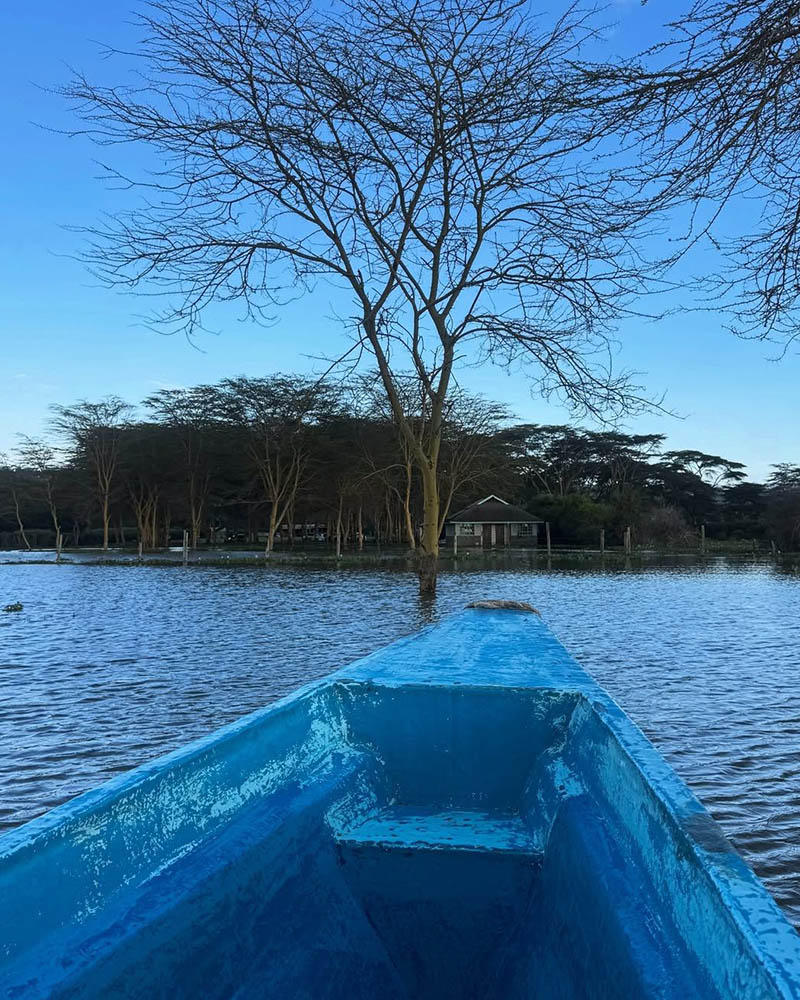
Due to rising lake levels, Crescent Island is currently accessible only by boat. But do not let that put you off, the crossing is a mini-safari in itself.
Boat operators along the southern and eastern shores (near Sanctuary Farm, Marina, and several lodges) offer transfers. The ride takes 10 to 45 minutes depending on your departure point and lake conditions. Along the way, expect hippos surfacing beside the boat, African Fish Eagles diving for their catch, and pelicans gliding in formation overhead.
Boat transfer costs: Per boat (not per person), currently around KES 1,500–2,000 one way. Always confirm with your specific operator before departing.
Scam Alert: Make Sure You’re at the Real Crescent Island
IMPORTANT:
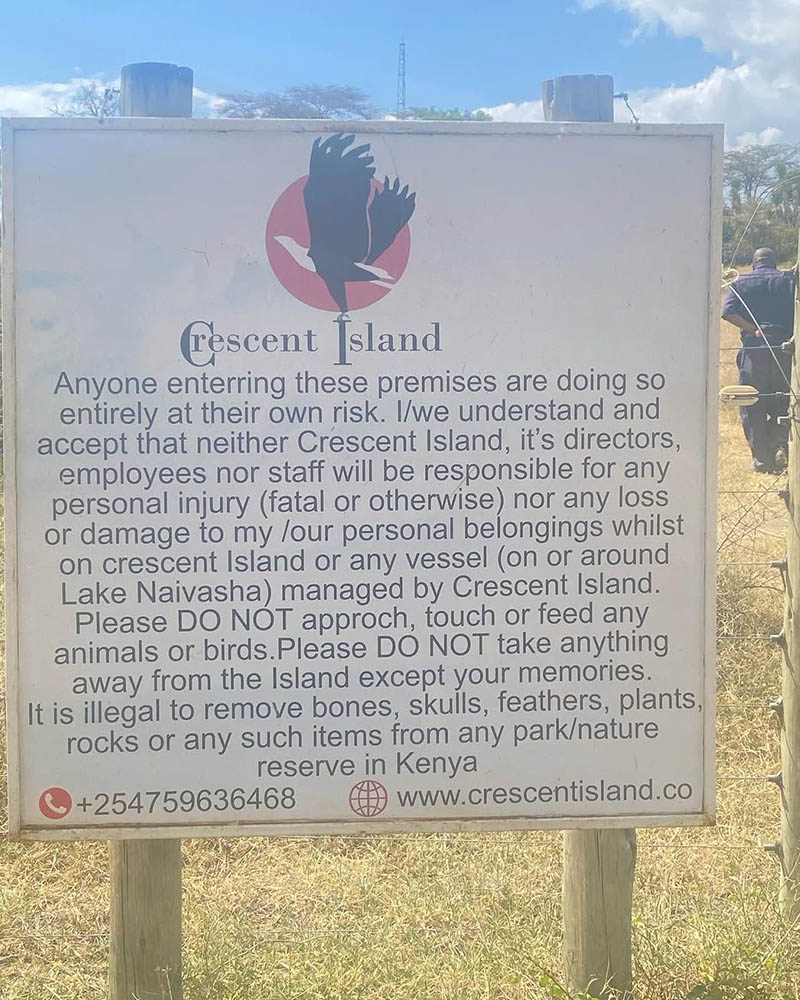
Warning: Some boat operators charge for ‘Crescent Island’ but take visitors to private riparian land near the Yacht Club where a few stray animals graze. Always book with your lodge or use a recommended boat operator, and confirm you are heading to the official Crescent Island Game Sanctuary (crescentisland.co). Look for the uniformed guides at the official jetty upon arrival.
Entry Fees & Costs to Crescent Island (2026 – Updated)
| Visitor Category | Entry Fee |
| Non-resident adult | USD 33 (approx. KES 4,300) |
| Non-resident child | USD 17 (approx. KES 2,200) |
| East African resident adult | KES 1,100 |
| East African resident child | KES 550 |
| Kenyan citizen adult | KES 800 |
| Kenyan citizen child | KES 400 |
Fees are paid at the official jetty on arrival. Cash is strongly recommended; card facilities are limited. Fees go directly toward conservation, staff wages, and habitat protection.
Guide fees: Hiring a local island guide is subject to availability and is not mandatory, but is strongly encouraged for first-time visitors. A reasonable tip of KES 300 – 500 is appreciated and goes directly to the guide.
Wildlife You Will Walk Beside on the Island
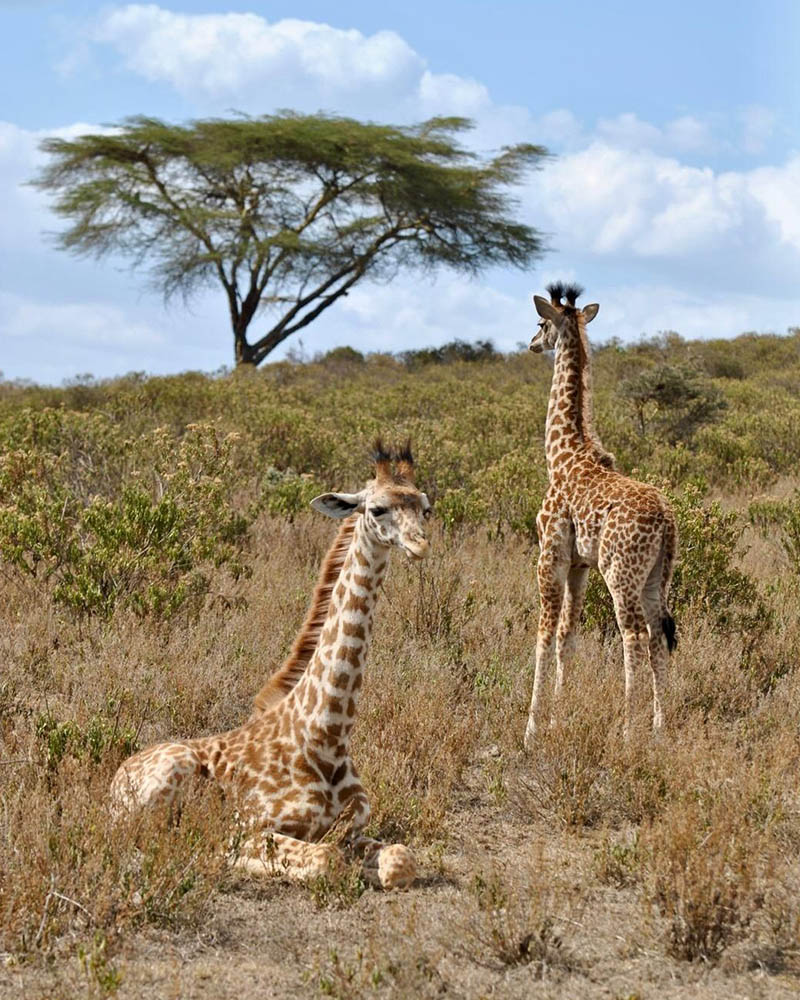
The wildlife density on Crescent Island is extraordinary. The moment you step off the boat, you are in their territory, and they are completely unfazed by your presence.
- Maasai Giraffes: The island’s resident herd is well-habituated to human visitors, allowing for remarkable low-angle photography and close encounters.
- Zebras & Wildebeests: Mixed herds graze peacefully along the crater rim, often within a few metres of the walking trail.
- Impalas, Waterbucks & Dik-Diks: Watch for impalas leaping through the grass, waterbucks hugging the shoreline, and tiny dik-diks darting through the brush.
- Birds: Over 200 species call this area home, African Fish Eagles, Herons, Kingfishers, Ospreys, Pelicans, and Lily-Trotters are commonly spotted.
- Hippos: Safe to view from a distance during the day. Be aware that hippos come ashore to graze at dusk — this is why the sanctuary enforces a strict 5:45 PM closing time. Also, there are reportedly pythons introduced to manage the gazelle population, but no confirmed sightings are needed to enjoy the walk!
Self-Guided vs. Guided Walk – Which Is Right for You?
The island’s flat terrain and clearly marked paths make it easy to explore independently. A self-guided walk is ideal for couples wanting a slow romantic stroll, photographers who want to linger for the perfect shot, or repeat visitors who know the layout.
However, hiring a guide is genuinely worth it if you are visiting for the first time, travelling with children, or want to go deeper into the island’s ecology. The guides are brilliant at spotting concealed wildlife, explaining animal behaviour, pointing out rare birds, and keeping you a safe distance from animals with young. They also know which muddy patches to avoid after rain, and after heavy rains, some areas near the water’s edge can be unexpectedly boggy.
Practical Tips for Your Best Visit
Best Time to Visit
Best time of day: Early morning (8:30 AM – 10:30 AM) or late afternoon (3:00 PM – 5:00 PM). Midday heat is intense and animals seek shade.
Best season: June to October and December to February (dry seasons) offer the clearest skies and most active wildlife. March to May (long rains) brings lush greenery and spectacular birdlife – fewer crowds, but muddy paths.
What to Wear
- Neutral earth tones – greens, browns, khaki. Avoid neon or bright red, which can startle the animals.
- Closed, comfortable walking shoes or light hiking boots. Leave the sandals behind.
- A light jacket or fleece for early morning – the lake breeze can be surprisingly cool.
- Sun hat, sunscreen, and sunglasses for midday visits.
What to Bring
- Camera with a long lens for wildlife photography.
- Binoculars – essential for birdwatching.
- A packed picnic. Sitting under an acacia tree while zebras graze nearby is one of Naivasha’s great pleasures. Pack out all your rubbish.
- Island Fever Cafe: If you forget your picnic, the recently opened on-site cafe serves wraps, gelato, burgers, salads, and fresh juices, a lovely treat after your walk.
Crescent Island vs. Hell’s Gate – or Why Not Both?
Crescent Island and Hell’s Gate National Park are often compared, but they offer very different experiences, and most visitors do not realise how easy it is to combine both in a single day.
| Feature | Crescent Island | Hell’s Gate |
| Wildlife | Giraffes, zebras, waterbucks, hippos | Zebras, giraffes, buffalo, baboons |
| Activity | Walking safari on foot | Walking, cycling, hiking, rock climbing |
| Predators | None (predator-free) | Some (stay alert) |
| Terrain | Flat grassland / lakeshore | Gorges, cliffs, geothermal landscape |
| Entry (Citizen) | KES 800 | KES 215 (KWS rates) |
| Best for | Intimate wildlife, photography, romance | Adventure, cycling, dramatic scenery |
Link: Hell’s Gate National Park guide | Naivasha weekend itinerary guide
Frequently Asked Questions About Crescent Island
Is Crescent Island worth visiting?
Absolutely, especially for travellers who have done vehicle-based safaris before and want something different. The ability to walk freely among wildlife is a rare and memorable experience that no vehicle safari can replicate.
Are there dangerous animals on Crescent Island?
There are no large predators (lions, leopards). However, hippos come ashore at dusk, and buffaloes are present on the island, so always follow your guide’s instructions and maintain a respectful distance from all wildlife.
Can I visit Crescent Island without a guide?
Yes, self-guided walks are permitted. However, for first-time visitors, families with children, or those unfamiliar with wildlife behaviour, hiring a local guide is strongly recommended. Guides are available on a first-come, first-served basis.
How long should I spend on Crescent Island?
Allow a minimum of 2 hours for a satisfying walk. A half-day (3 – 4 hours including the boat transfer and a bite at the cafe) is ideal and makes for a fulfilling experience without feeling rushed.
What time does Crescent Island close?
The sanctuary enforces a strict 5:45 PM closing time for all visitors, due to hippo activity after dusk. Plan your day accordingly and do not miss the last boat.
Can I stay overnight on Crescent Island?
Yes! Crescent Island offers a small number of accommodation options, including self-catering cottages (such as Fish Eagle Cottage). Staying overnight lets you enjoy the sanctuary at dawn and dusk, completely without day-visitor crowds. Contact crescentisland.co for current availability and pricing.